
Packaged Real Estate
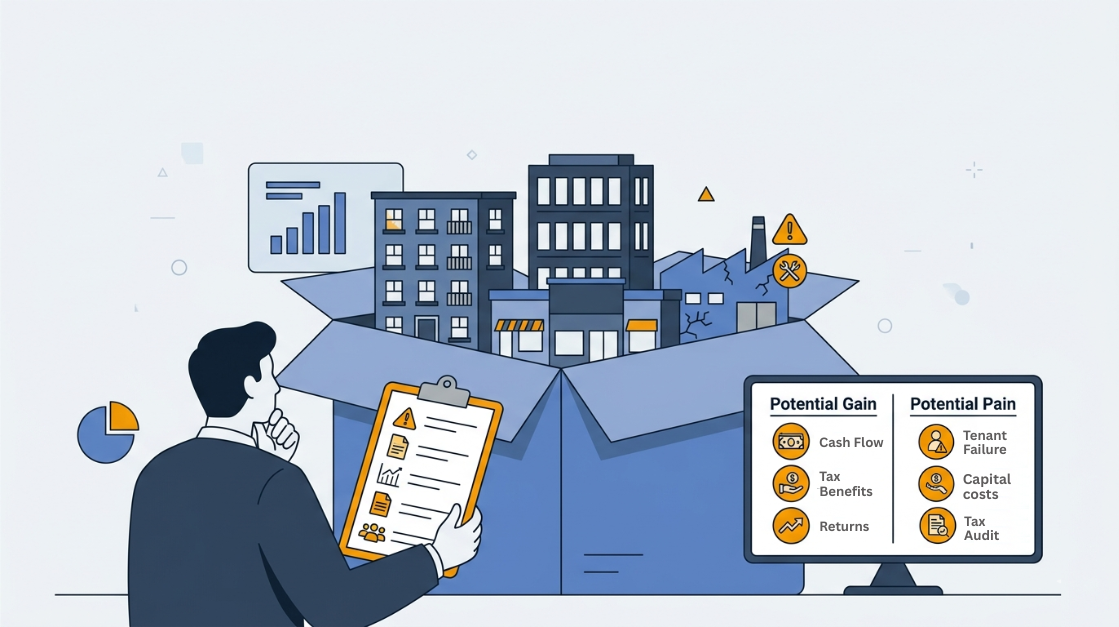
Is what you see what you get?
What considerations are appropriate when investing in a package of real estate? At United Dominion Realty Trust ("UDR") we would buy portfolios and companies, understanding that there was going to be some bad (“challenged properties”) in – or with - the good.
When you buy a real estate security – REIT, DST, Fund – there is going to be some bad in with the good. Today we will discuss some key points to determine when the potential gain (e.g., cash flow, tax benefits, overall return) may be worth the pain (e.g., tenant failure, tax audit, unexpected capital costs, commissions, and fees).
UNDERSTAND YOUR GOALS FIRST
The shoe salesperson informs you of a discount if you buy three pairs of high heels. Great deal…unless you don’t need, or even wear, high heels! Don’t blame the salesperson if you buy the wrong shoes; focus on who you are and what is right for you.
Ditto with buying packaged real estate. Your job is to come into the discussion with some idea of what you want, need, and can afford (amount and level of risk). It also helps when you can articulate what you already have (and how your investments in the past have performed). The ideal investor is also honest about what they don’t know, where they failed to research and discern in the past, and what their greatest fear. Then the salesperson can be effective in helping match you with what will fit best your investment goals.
ONE SIZE DOES NOT FIT ALL
Use this checklist as a starting point in determining whether the packaged real estate investment opportunity might be appropriate for your needs, wants, and desires.
ODD MAN OUT. What is the one property or aspect of the investment which does not match the norm? Why has it been inserted? Who does it benefit? Can it be removed? Could it bring down the investment?
ADVOCATE OR WHAT. When and how does the person selling get paid (e.g., real estate broker, securities registered representative, owner)? May they win even if you lose?
ON LEASE. Is the corporate parent directly on the lease or is it a subsidiary (or franchisee) where there is no / little capital to support their lease obligation?
ON POINT EXPERIENCE. Who in the team has hands-on experience with this type of asset (e.g., student housing) in this specific market (e.g., Northeast Gwinnett County, GA) in this unique condition (e.g., electrical systems need replaced to meet code)? Do you want to pay them while they learn the business? When, if ever, do they invest their personal money into real estate? When have they ever been personally liable on significant debt on real estate?
WORST CASE. If things fail to work as projected, how will you be hurt beyond the loss of your investment? Are you taking on undisclosed liability? Will the IRS be demanding interest and penalties be paid? What recourse, if any, will you have against others?
MARKET HISTORY. How has this property (or asset type) performed when the market was strong and when it was weak (particularly in comparison to competitors)? What drives its position in the market? Who has the insight and financial strength to improve the position of the property?
DEEP POCKETS. Even when the sponsor of the investment is not permitted to add capital to save a property (e.g., a DST), there is something comforting if the sponsor has deep pockets sufficient to survive an economic downturn.
BOTTOM LINE. The rules of real estate investing change when you move from buying direct (where you are responsible for everything) to buying into a packaged property (where someone else has some – or all - of the responsibility…and control). Even if you love the real estate in the package, remember that you are also buying into their management, leasing, ethics, financial condition, construction skills, and structure. You don’t want to enter that jungle without an experienced guide who is positioned on your side of the transaction (where they win only when you win).